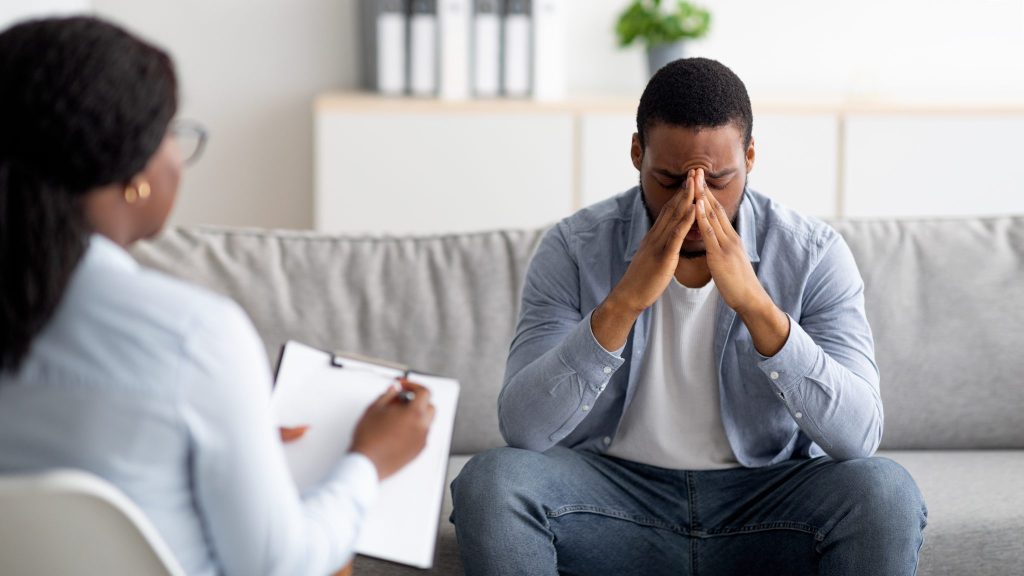
Starting counselling for trauma and PTSD is similar to driving. Many high‑achieving women begin trauma counselling because they feel stuck, overwhelmed, or disconnected from themselves. You may be new to counselling and feel nervous about starting. In counselling, I create a safe space and ensure you feel heard, validated, and supported. We unpack your trauma, discuss your coping mechanisms, and share tools and strategies to help you cope when triggered. Some sessions may involve driving in difficult terrain as you share upsetting and painful experiences. But you are not alone; we process these experiences as we move forward together. You can pull over, slow down, or change lanes anytime. You gain new insight and understanding, which creates new experiences and awareness. Driving home after your counselling session, you feel validated, supported, reassured, and more resilient. You also feel more connected with your authentic self.
Hi, my name is Leena Mehta, I’m a Burnaby therapist, and I’m glad you’re here. I hope you find a counsellor who is a great fit. I am a registered clinical counsellor in Burnaby (#19428) and am committed to supporting women who have experienced trauma. I support high‑achieving women, professionals, students, caregivers, and South Asian women who are healing from trauma. Let’s process your trauma so you can live your best life. You don’t have to do it alone. Let me help.
Since 2015, I’ve worked with individuals who experience traumatic and distressing experiences. This affected their relationships with others and with themselves, including their ability to show up to work, socialise, and pursue their goals.
Tired of feeling stuck? What if I told you that you can access support and process your experience in a safe, compassionate space? Let’s work together so you can feel less stuck.
Trauma includes emotional, physical, psychological, financial, or sexual trauma. It may also include:
These experiences shape beliefs, coping strategies, and emotional patterns, often without us realising it.
At Ease Counselling in Burnaby, I work with you to help you achieve your goals and improve your mental health. Starting counselling takes courage and strength. Being a survivor of trauma is a part of your story, but it’s not the whole story.
Many high‑achieving women learned early on to be strong, capable, and self‑sufficient. Many high‑achieving women seek trauma therapy because they feel overwhelmed at work, struggle with emotional dysregulation, or carry negative core beliefs that impact their confidence.
Internally, you may experience:
At Ease Counselling in Burnaby provides a safe space to share and heal from the intergenerational trauma you experienced and to explore how it impacts your life. We make space for your feelings and get curious about what these feelings need to heal. As your counsellor, I validate and reassure you. I don’t judge you or tell you what to do. As your counsellor, I empower you, and together we focus on your strengths.
You appear confident and capable at work, but internally you may feel triggered, overwhelmed, or burnt out: a common experience for high‑achieving women seeking trauma counselling.
You excel academically but struggle with sleep, flashbacks, or pressure to perform.
You meet everyone’s needs but struggle with negative core beliefs or emotional exhaustion.
You may carry cultural expectations, family pressure, or the weight of “what will people think.”
Let’s create a safe space for you in counselling. As your counsellor in Burnaby, I’m curious to learn about what you need to feel safe, where in your body you feel this and what thoughts come up. You may be grieving a version of you that couldn’t exist because of family dynamics, culture or norms and values. There may be a part of you that feels angry or resentful as a result. We make space for these feelings and determine what they need.
Trauma can impact your life in several ways. Some examples include:
As your Burnaby BIPOC counsellor, I ensure you feel seen, heard, validated, and accepted. Starting your healing journey takes courage, and I am here to support you every step of the way. I know it’s not easy to reach out and start counselling, but I’m here to help when you’re ready.
Burnaby trauma counselling provides a nonjudgmental, kind, and compassionate space to help you heal from the trauma you experienced. Burnaby trauma counselling helps high‑achieving women reduce shame, manage perfectionism, and rebuild self‑esteem. Together, we focus on your needs, which may include the following:
I need your help in determining which counselling modality is a good fit for you. It’s okay if you don’t know. I use a variety of different counselling modalities to support clients with intergenerational trauma. Every client is different, and as a counsellor, I support each client with where they are in their healing journey. Counselling modalities that can help include:
CBT can help women identify and challenge negative thought patterns. It can also help women challenge thinking traps.
DBT can help women with emotional regulation and distress tolerance by learning skills and strategies to help them cope. For example, noticing signs of sadness in the body and learning how to manage these feelings.
EMDR can help women process traumatic and distressing experiences through bilateral stimulation.
You may not be ready to start counselling, but there are resources you can access in the meantime.
https://bc.cmha.ca/programs-and-services/
https://helpstartshere.gov.bc.ca/mental-health
https://www.pac.bluecross.ca/mentalhealth
988 suicide crisis helpline
Trauma and PTSD counselling in Burnaby focuses on the connection between thoughts, feelings, body sensations, and behaviour. We also explore how your trauma impacts these, how you cope, and how your body responds when you don’t feel safe. When they feel unsafe, some people freeze, some fight, and others flee. Your trauma may be connected to past experiences. For example, you may have experienced childhood abuse and, as a young adult, experienced domestic violence. Moreover, we unpack your relationship with yourself, including self-talk, self-esteem, and self-worth. Negative self-talk can make it difficult to see your strengths, resilience, and accomplishments. In counselling, we challenge this self-talk and work on building self-compassion and self-kindness.
Trauma and PTSD counselling in Burnaby explores the impact of your trauma. We unpack how it impacts your thoughts, feelings, view of self, and relationship with others. We also identify triggers and how you react or respond when triggered. We focus on negative core beliefs, their origin, and how they impact your life. Individuals who have experienced a traumatic incident may not view the incident as traumatic. They may minimise, deny, or normalise the impact of the incident. This is a coping mechanism for some individuals and is not uncommon. Traumatic experiences can result in individuals feeling stressed, and some experience PTSD. Individuals with PTSD sometimes struggle with sleep, forming and maintaining healthy relationships, and day-to-day tasks such as driving to work. As your trauma therapist in Burnaby, I support you in sessions, and we build your resilience and identify your unique strengths to help you process your trauma.
Trauma and PTSD counselling in Burnaby works with you to help you process and heal from your trauma. You may have coping mechanisms, but these may no longer be effective. I share tools and strategies that help you cope and process your life transition. You may be processing the trauma you experienced as a result of the childhood abuse you experienced. Or, you may be processing the trauma you experienced due to an abusive relationship. We process your trauma along with all the feelings and thoughts that come to the surface in sessions. You may also have some anger towards yourself and a critical inner dialogue. You may blame yourself for the traumatic incident and, as a result, be hard on yourself. We work on channelling your anger and strengthening a kinder and more compassionate inner dialogue.
As your Burnaby therapist, I unpack and explore what identity means to you and what you believe it comprises. For some clients, their identity consists of their values, cultural norms, mainstream norms, traditions, language, sense of belonging and culture. For others, it may include gender or sexual orientation, as well as personal characteristics and qualities. Sometimes clients are not aware of what their identity consists of, and in these cases, we explore it together. What if I told you that your identity may evolve, and what you identify with currently may not be something you relate to in five or ten years?
Counselling in Burnaby focuses on how feelings of shame surface, where they stem from, and how they impact your life. As your Burnaby therapist, I support each client in processing and healing from their feelings of shame. I also support clients in increasing self-compassion, challenging negative thoughts, identifying their strengths, forming healthy boundaries, practising mindfulness, setting goals, forgiving themselves and caring for themselves. What if you started to show kindness and compassion to your negative self-talk?
Yes, it is possible to heal from intergenerational trauma. Every client has a unique healing journey, and while sometimes it takes time to process and recover, it is possible to heal. Counselling in Burnaby supports individuals who want to process and heal from intergenerational trauma. As a Burnaby therapist, I have supported several clients on their healing journeys.
There are small steps women can take to build their self-esteem. Here are a few to try. Firstly, by becoming curious about their thoughts. Some women struggle with negative thoughts and negative inner dialogue. They can challenge this and unpack where this stems from in counselling. Secondly, acknowledge what is going well. For example, as a Burnaby therapist, I support clients in focusing on their strengths and achievements. Thirdly, identifying needs and implementing boundaries. Finally, acceptance and forgiveness for past mistakes or regrets. What if I told you that you can do hard things?
The number of sessions you may need varies from client to client. Every client I support as a Burnaby therapist is different, and their needs vary. I work with each client to establish goals, and we work together to achieve them. Clients who have been struggling for a while may need more sessions to help them unpack thought patterns and identify where they feel stuck. However, clients who have been struggling for a shorter period and seek support sooner may find they have less to unpack and process.
As a Burnaby BIPOC counsellor, I focus on meeting you where you are and working at your pace, alongside you, with compassion, kindness, and curiosity, both in person and online.
As a Burnaby therapist, I incorporate evidence-based modalities in every session. I am trained in various evidence-based modalities, including Acceptance Commitment Therapy, Cognitive Behavioural Therapy, Dialectical Behavioural Therapy, and Eye Movement Desensitisation and Reprocessing. Each of these modalities equips me to support your unique needs, and we work together to achieve your counselling goals.
As a Burnaby therapist, I understand the impact of inequality and oppression, providing a safe, non-judgmental, and inclusive space in-person and online. People from all ethnic backgrounds, genders, and sexual orientations, including 2SLGBTQ+, are welcome. As a South Asian therapist in Burnaby, I create a culturally sensitive space and am curious to learn more about your culture, norms, and values.